
Double coats
How to Brush a Double-Coated Dog at Home (Without Damaging the Coat)
The right tools and a simple technique make brushing a double coat faster, easier and far more effective. Here's how to do it, step by step.
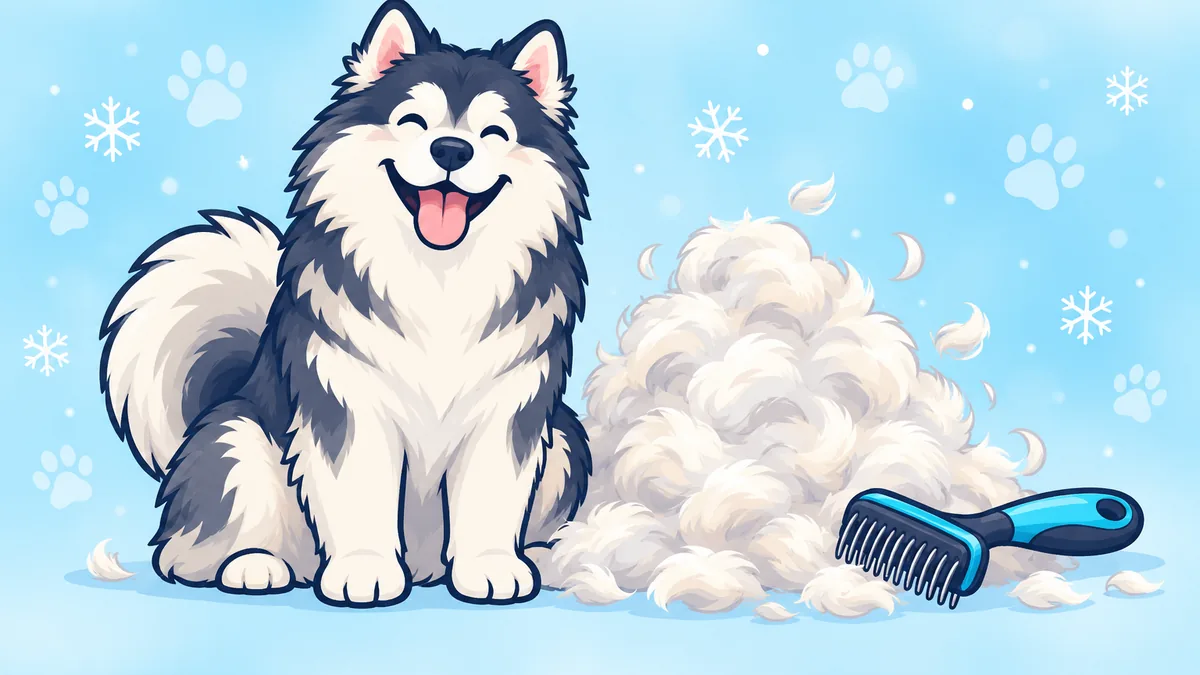
Brushing is the single most useful thing you can do for a double-coated dog between professional grooms. Done well, it removes loose undercoat before it lands on your floor, prevents tangles and mats, and gives you a chance to check your dog's skin. Done badly, it barely scratches the surface. Here's how to do it properly.
The tools you need
- Undercoat rake: long, rounded teeth that reach into the undercoat and pull out loose fur. This is your main tool.
- Slicker brush: fine bent wires for working through the outer coat, finishing, and smaller tangles.
- Wide-toothed metal comb: to check your work. If the comb glides through to the skin, that section is done.
- Optional detangling spray: a light mist of a dog-safe coat spray reduces breakage and static.
Line brushing, step by step
Line brushing is how groomers make sure they reach the skin, not just the surface.
- Start at the back legs and work towards the head.
- Part the coat with your hand so you can see a line of skin.
- Brush the hair below the part with the undercoat rake, in the direction the coat grows, using short, gentle strokes.
- Move the part up a centimetre or two and repeat, working in small sections.
- Finish with the slicker brush, then run the comb through to check for missed spots.
Trouble spots to check
- Behind the ears, where the softest fur mats first
- The armpits and inside the front legs
- The "pants" or britches on the back legs
- The base of the tail and the tail itself
- Under the collar or harness
Mistakes to avoid
- Brushing only the top layer. The coat looks fluffy while mats build up underneath.
- Brushing too hard. Pressing hard or brushing one spot over and over can irritate the skin.
- Brushing out mats when wet. Water tightens mats. Work on them when the coat is dry.
- Marathon sessions. Ten minutes a few times a week beats an hour-long battle once a month.
How often?
Two or three times a week for most of the year, and daily while your dog is blowing their coat. If you're not sure when that is, see our guide to coat blowing season in Sydney.
When to call in the professionals
Book a professional de-shed when the coat starts to blow, when you find mats close to the skin, or when brushing at home just isn't keeping up. A hydrobath and high-velocity blow-out remove far more loose undercoat than brushing alone. Here's what happens in a professional de-shed.
We specialise in arctic breeds and fluffy coats at our salon in Brighton-Le-Sands. See our de-shedding service.
Need a hand with your dog's double coat?
We're at 287 Bay Street, Brighton-Le-Sands, open 7 days, 9am to 4pm.
Quick answers
What is the best brush for a double-coated dog?
An undercoat rake is the main tool for removing loose undercoat, with a slicker brush for finishing and a metal comb to check you have reached the skin.
How often should I brush my double-coated dog?
Two or three times a week for most of the year, and daily while your dog is blowing their coat.
Can de-shedding tools damage my dog's coat?
Blade-style de-shedding tools can cut or damage the guard hairs if used too often or too hard. Use them gently and sparingly.
