
Double coats
What Happens in a Professional De-shed? (And What Affects the Price)
Ever wondered how a groomer gets that much fur out of a Husky? Here's what happens in a professional de-shed, step by step, plus what affects how long it takes and what it costs.
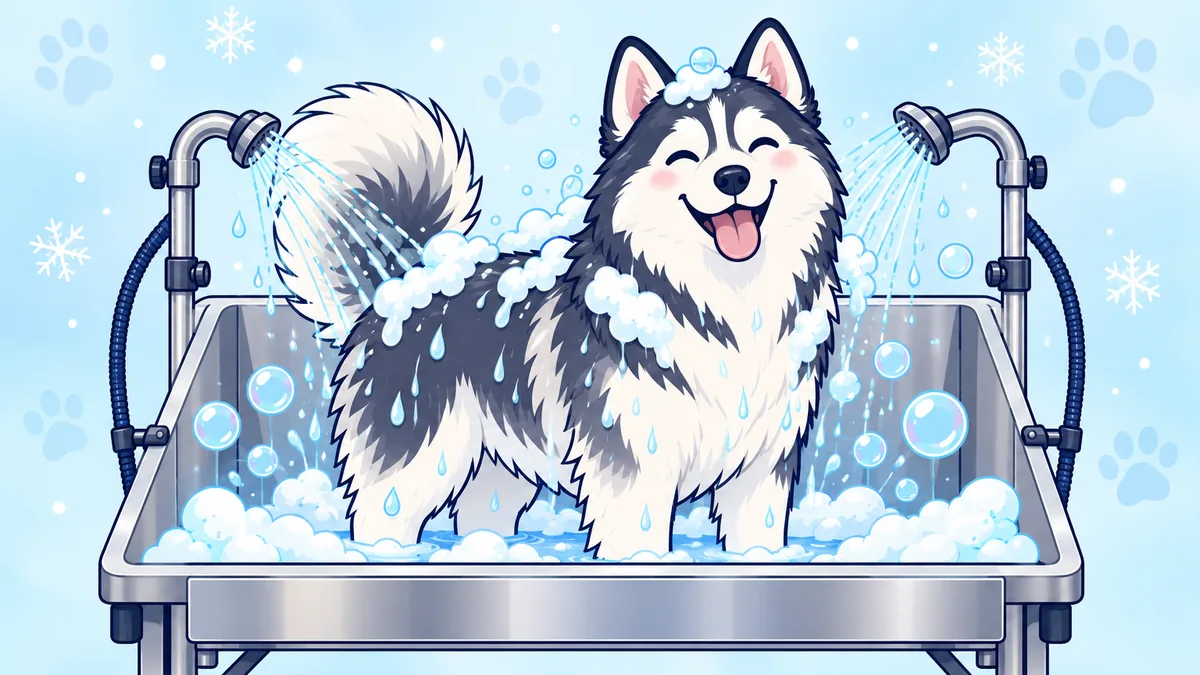
If you own a Husky, Malamute, Samoyed or another double-coated breed, you've probably heard that a "de-shed" is the answer to the fur on your floors. But what actually happens during one? Here's a look behind the scenes at our Brighton-Le-Sands salon.
The goal of a de-shed
A double coat has a soft, dense undercoat and longer guard hairs on top. A de-shed removes the loose, dead undercoat that's ready to come out, while keeping the guard hairs that protect your dog's skin. It isn't a haircut, and it isn't a shave. If you're wondering why, read why double coats shouldn't be shaved.
Step 1: a deep hydrobath
A thick double coat is surprisingly hard to wet all the way through. A deep hydrobath works shampoo and conditioner right down through the coat to the skin. This cleans the coat and helps loosen the dead undercoat so it releases more easily. We use premium Plush Puppy products, chosen to suit your dog's coat.
Step 2: the high-velocity blow-out
This is where the magic happens. A high-velocity dryer pushes air through the coat with real force, blowing the loose undercoat out in clouds. It also dries the coat properly, all the way to the skin. That matters, because a damp undercoat can lead to skin problems.
Step 3: the brush-out
Once the coat is dry, it's carefully brushed out with tools like an undercoat rake and slicker brush, to finish removing loose undercoat and any tangles. The result is a lighter, cleaner, fluffier coat and far less fur around your home.
How long does a de-shed take?
It depends on the dog. A big Malamute in the middle of a coat blow is a very different job to a Husky that's brushed every few days. Drying a thick double coat properly simply takes time, and that's not something to rush.
What affects the price?
Our prices are starting prices, and the final price is confirmed after we assess your dog. These are the things that make a difference:
- Size: a bigger dog means more coat to wash, dry and brush.
- Coat density and length: a Malamute's undercoat is a bigger job than a lighter coat.
- Coat condition: tangles and mats take extra time to work through gently.
- Time since the last groom: regular de-sheds are usually quicker than catching up after a long gap.
- Temperament: nervous dogs get the extra time and patience they need.
The best way to keep de-sheds quicker and easier is regular brushing at home and booking regular grooms, especially before the coat blows.
How often should I book a de-shed?
Many owners of arctic breeds book every six to twelve weeks, plus an extra visit at the start of a coat blow. Our guide on how often to groom a Husky, Malamute or Samoyed goes into more detail.
De-shedding big, fluffy dogs is what we specialise in. See our de-shedding service, or book online any time.
Need a hand with a professional de-shed?
We're at 287 Bay Street, Brighton-Le-Sands, open 7 days, 9am to 4pm.
Quick answers
What is a de-shedding treatment?
A professional de-shed removes the loose, dead undercoat from a double-coated dog using a deep bath, a high-velocity blow-out and a thorough brush-out, while keeping the protective guard hairs.
Does a de-shed stop my dog shedding?
No dog stops shedding completely, but removing the loose undercoat in one go means far less fur around your home in the weeks that follow.
How much does a de-shed cost?
It depends on your dog's size, coat, condition and temperament. Our prices are starting prices, and the final price is confirmed after we assess your dog.
